We’re thrilled to celebrate the accomplishments of our incredible student library staff graduating this year. These talented individuals have balanced their studies with their roles at the University of Alberta Library, immensely contributing to the university community through their skills, hard work, and enthusiasm.
To celebrate their achievements, we asked our graduating student library staff to reflect on their time at the University of Alberta Library, share their proudest moments, and offer insights into their academic journeys. Join us in congratulating these inspiring grads as they embark on their next adventure — read on to learn about their stories and aspirations!
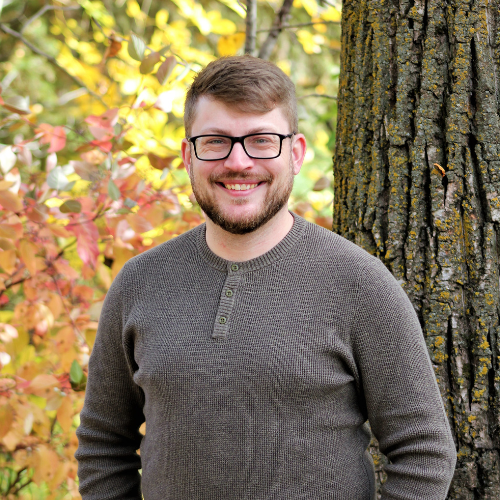
Brett Sheehan
Program: Master of Library and Information Studies | Role at University of Alberta Library: Digital Repositories Unit Assistant (DRUA) + Student Information Services Assistant (SISA)
Q: What advice would you give to future student staff about working in the library?
A: My experiences working as a DRUA and as a SISA have had an indelible impact on me. The lessons I’ve learned working in these positions have prepared me for future library work in ways that course learning alone never could have.
I find myself so grateful to have had these opportunities, and I cannot
recommend enough that students seek these opportunities out while studying at the University of Alberta.
Not only have I had the opportunity for hands-on, practical applications of my learning, but I’ve met incredible people doing incredible things, and I feel privileged for their mentorship.
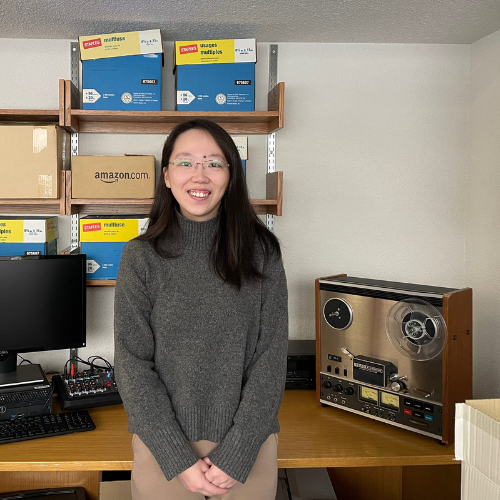
Xuege Wu
Program: Master of Arts, English | Role at University of Alberta Library: Student Library Assistant at the Digital Scholarship Centre
Q: Can you share a favourite memory or one of your proudest moments during your time as a library staff member?
A: My favourite part of working at the Digital Scholarship Centre (DSC) was getting real-world experience helping patrons! Whether in person or online, I loved figuring out their needs—like finding the right software, booking spaces, or getting them access to high-performance computers.
It was so rewarding to turn theory into practice, with lots of support from colleagues and plenty of learning along the way!
Q: What do you hope to take from your university library experience in your future endeavours?
A: My supervisor at the DSC, Hanne Pearce, is a media production expert. When she found out about my love for digital design, she let me create posters and graphics for the DSC and taught me how to use visuals for marketing and communication. It was so fun and rewarding! I’m still figuring out my career path after graduation, but working at the DSC has boosted my skills and opened up so many exciting possibilities.
Q: What excites you most about graduating and moving on to the next chapter of your life?
A: I’ve been lucky to work in two amazing departments at U of A Library and Museums (UAM and DSC). Their warm, inclusive vibe, helpful guidance, and fun team-building activities gave me more than just library skills—they helped me understand myself better and feel confident being my authentic self at work. I’m so excited to take this courage with me as I step out of my comfort zone and keep growing!
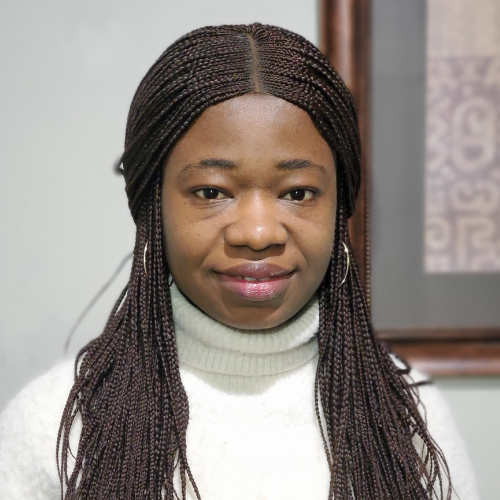
Folashade Braimoh
Program: Master of Arts, Digital Humanities | Role at University of Alberta Library: Library Access Services Assistant
Q: Can you share a favourite memory or one of your proudest moments during your time as a library staff member?
A: I am really proud to have contributed to the successful migration from BOOKIE to CaiaSoft for the high-density storage solution. This integration helps manage the 3.8 million items in the library depository and supports the goal of reaching a 5.2 million item capacity.
Additionally, I enjoyed tasks like shelving, scanning, assisting with interlibrary loans, and processing online requests, which helped the library, students, and faculty with their research. Being able to locate hard-to-find books and ensuring they were accessible through the system or shipping gave me a great sense of accomplishment, knowing my work impacted local and international institutions, libraries, and individuals.
Q: What advice would you give to future student staff about working in the library?
A: Pay close attention to details and stay organized- it really makes a difference! Managing large volumes of information is a skill that will benefit you in many career paths. Take the time to ask questions- whether from your supervisor, other library staff or fellow students. The library is a great place to develop valuable research and organizational skills. The staff are friendly and always happy to help, and collaborating with other students makes the work more enjoyable and rewarding!
Q: What do you hope to take from your university library experience in your future endeavours?
A: Working at the library has taught me a lot about organization, information management, problem-solving, teamwork, and efficiency; which are valuable to many jobs. Managing book shipments, handling digital requests, and using tools like RELAIS, Purolator, and Canada Post for interlibrary loans and shipments, both locally and internationally, have given me a strong sense of responsibility and attention to detail.
Operating lift trucks for shelving and handling materials further enhanced my skills. I also gained valuable experience with high-density storage solutions and digital tools like CaiaSoft and BOOKIE, as well as using barcode scanners and Excel for inventory management. These will be useful in future roles.
Q: What excites you most about graduating and moving on to the next chapter of your life?
A: I am excited to see what is next! Graduating with my Master’s degree from the University of Alberta and gaining significant work experience while studying feels like a significant milestone. I am eager to apply what I have learned to new opportunities. It is a mix of excitement and nervousness, but I am ready for the challenge. I look forward to roles where I can use my skills in problem-solving, digital systems, communication, organization, information management, and analytical thinking to make a positive impact.
I am excited to keep learning, growing professionally, and contributing to projects that drive efficiency, innovation, and create meaningful solutions.
Amy Kamel
Program: Master of Library and Information Studies | Role at University of Alberta Library: Student Information Services Assistant (SISA) + Student Archives Assistant
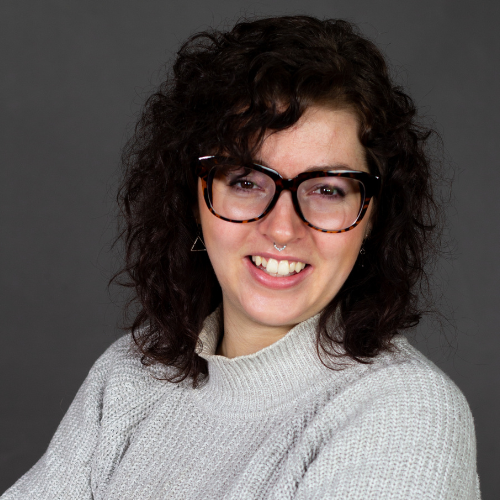
Q: Can you share a favourite memory or one of your proudest moments during your time as a library staff member?
A: Shelving the first accession that I processed and housed myself into the depository, knowing that it is now discoverable to future researchers.
Q: What do you hope to take from your university library experience in your future endeavours?
A: I hope to carry the confidence I have gained through my work with the library into my next position. I feel more sure of myself to step into a new role than I have been at any other crossroads in my life so far.
Not only have I learned new skills, I feel confident in my ability to adapt and excel in whatever environment I find myself.
Abdulmalik Abbas
Program: Master of Education, Secondary Education | Role at University of Alberta Library: Library Clerk – Access Services
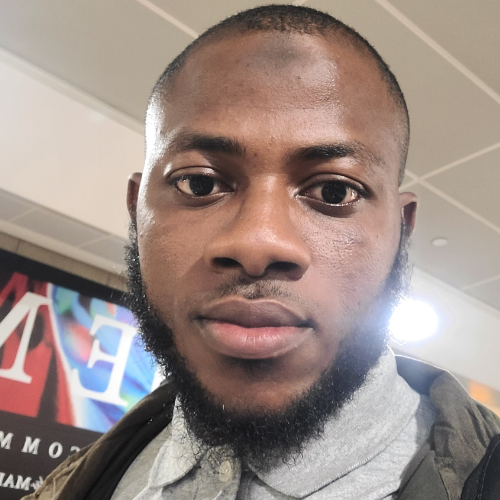
Q: Can you share a favourite memory or one of your proudest moments during your time as a library staff member?
A: One of my proudest moments at the library was how quickly I adapted to new systems and processes. When CaiaSoft was first introduced, I was able to grasp its technical aspects swiftly, integrating it seamlessly into my workflow.
Also, learning to operate the forklift safely and efficiently was an unexpected but valuable skill that I take pride in.
Q: What advice would you give to future student staff about working in the library?
A: Attention to detail is key. Whether handling book shipments, managing inventory requests, or tracking resources, accuracy ensures smooth operations. Also, don’t hesitate to ask for help or clarification; the library team is supportive, and learning from experienced colleagues makes the job easier and more enjoyable.
Q: What do you hope to take from your university library experience in your future endeavours?
A: This role has strengthened my ability to work methodically, stay organized, and manage large volumes of books effectively. The skills I’ve gained—such as using database systems, handling logistics, and working independently are transferable to many fields. Also, the discipline and problem-solving mindset I’ve developed will be valuable in any professional setting.
Q: What excites you most about graduating and moving on to the next chapter of your life?
A: I’m excited about applying the skills and knowledge I’ve gained to new challenges, particularly in research, data analytics, and program evaluation. Graduation marks a step toward bigger opportunities, and I look forward to building a career that allows me to combine my analytical skills with meaningful impact.
It’s also exciting to embrace new learning experiences and professional growth beyond university.
Alireza Memarian
Program: PhD, Process Control, Chemical and Materials Engineering | Role at University of Alberta Library: Interlibrary Loans and Library Access Services Assistant
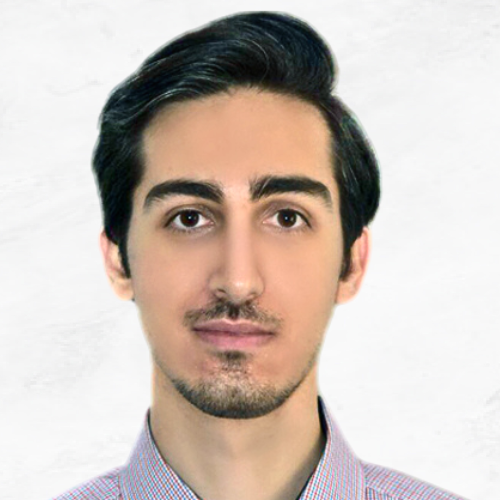
Q: What advice would you give to future student staff about working in the library?
A: Student staff should be aware that their role directly impacts students and their learning experience. This intensifies the necessity of paying attention to every detail of their role and their duties. In addition, in some positions, we are directly working with other universities.
Q: What do you hope to take from your university library experience in your future endeavours?
A: My university library experience has instilled in me a deep appreciation for lifelong learning and the importance of leveraging resources effectively. It honed my research, critical thinking, and time management skills, which are invaluable in any professional or academic setting.
Collaborating with peers in a knowledge-rich environment taught me the value of teamwork and diverse perspectives. I also developed proficiency in using advanced databases and technology to gather insights efficiently.
Moving forward, I aim to apply these skills to solve complex problems, make informed decisions, and foster innovation in my future endeavours, while continuing to prioritize self-improvement and curiosity.
Q: What excites you most about graduating and moving on to the next chapter of your life?
A: Graduating marks a significant milestone and opens the door to exciting new opportunities. What excites me most is the chance to apply the knowledge and skills I’ve gained to real-world challenges and make a meaningful impact in my field.
The transition to the next chapter of life represents growth, new experiences, and the ability to pursue my passions on a broader scale. It’s an opportunity to embrace independence, expand my horizons, and take on responsibilities that will shape my personal and professional journey. I look forward to turning my ambitions into reality and continuing to learn and evolve.
Blanka Stepankova
Program: Bachelor of Arts, Anthropology and French | Role at University of Alberta Library: Student Library Assistant at the Digital Scholarship Centre
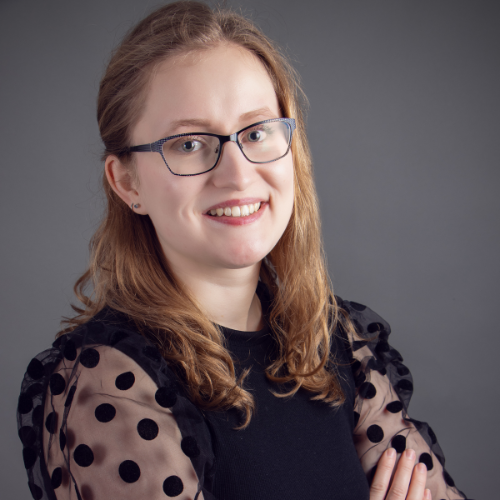
Q: What advice would you give to future student staff about working in the library?
A: Talk to your colleagues and learn as much as you can! Many skills can end up applying to your academic and personal life.
Q: What do you hope to take from your university library experience in your future endeavours?
A: Going forward, I know that I will
continue to embrace collaboration with team members and creativity in all projects!
Q: What excites you most about graduating and moving on to the next chapter of your life?
A: Hopefully more school – a Master’s Program in Anthropology!
This content is licensed under a CC BY-NC-SA 4.0 Creative Commons licence.