Tag:

Staff

    Happy World Digital Preservation Day! On the first Thursday of November, the international community of digital archivists, librarians, curators, creators, users, and everyone interested in or responsible for the preservation of digital records celebrates World Digital Preservation Day (#WDPD). The 2024 theme is Preserving Our Digital Content: Celebrating Communities. The WDPD is the initiative of the Digital Preservation Coalition (DPC). It allows us to connect with colleagues and like-minded people and “celebrate digital literacy of all types of communities around the world” (DPC).
    Within the U of A Library and Archives community, we would like to celebrate the WDPD by highlighting the completion of a large project aimed at preserving born-digital archival records that were acquired by the University of Alberta Archives (UAA) on legacy electronic media. The  UAA houses over 11 km of textual records and hundreds of thousands of audiovisual items, including film, video, audio, and photographic records. In addition to these analogue records, the UAA is also a home for born-digital records, which are becoming more and more common acquisitions. The content of these records highlights a variety of University of Alberta and affiliated communities: from faculties and departments to student groups to theatre groups to local communities. Currently, the acquisition of born-digital records to archives happens either through online transfers or deposits of records on external digital media like hard drives or USB drives. However, the UAA has been acquiring born-digital records in other forms since the late 1980s. Many of them came on floppy disks, primarily 5.25” and 3.5”.
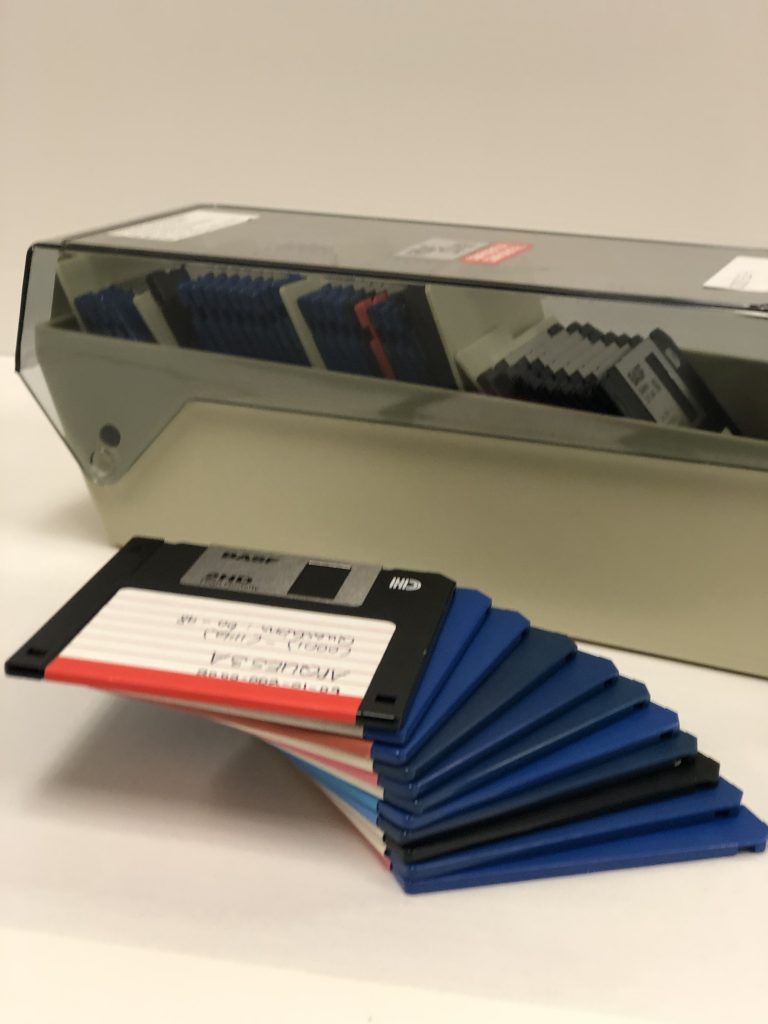
    Floppy disks / credit: Mohsen Kardar

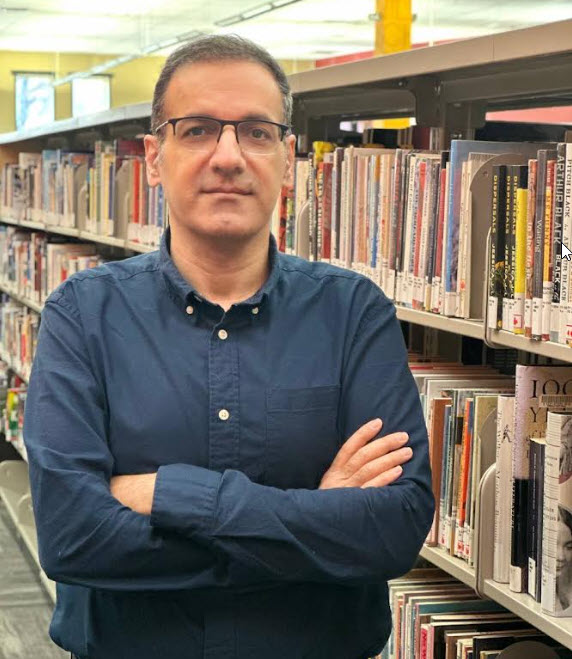
    From September 2023 to August 2024, the UAA was lucky to have Mohsen Kardar, a U of A School of Library and Information Studies alumnus, working with us as the Digital Preservation Assistant. Mohsen focused most of his time specifically on preserving archival records on floppy disks and, in addition, was involved in other digital initiatives at the Archives. As a result of the project, records from a total of 1,328 floppy disks were preserved, consisting of 788 3.5″ disks and 540 5.25″ disks. The entire process involved over 20 steps, each requiring the use of specialized software and hardware technologies to ensure successful preservation of and access to these records in the future.

    Key tools utilized:

    • KryoFlux: for creating bitstream copies of floppy disks.
    • FRED (Forensic Recovery of Evidence Device): for disk imaging and data transfers.*
    • BitCurator: for disk imaging, mounting, and scanning for personally identifiable information (PII).
    • DROID: for automated identification of file formats.
    • bulk_extractor: for scanning file systems for sensitive data.
    • BagIt and Bagger: for packaging digital objects and metadata.
    • Archivematica: for processing digital objects and metadata from ingest to access in compliance with the ISO-OAIS functional model.
    • Python scripts: for automating tasks such as virus scanning and file transfers, which significantly boosted efficiency.
    • And more!
    Mohsen Kardar

    Mohsen was instrumental in bringing this large project to fruition. Without his diligence, problem-solving skills, and focused attention, we would not have been able to complete a project of this size and complexity. Digital preservation is a collective effort and having Mohsen as part of our digital preservation community was invaluable.

    * Read more about FRED and KryoFlux in this 2023 article: Preserving Memories, One Bit at a Time:the FRED and KryoFlux Story!

    Thank you to the University of Alberta Archives team for authoring this post.

    This content is licensed under a CC BY-NC-SA 4.0 Creative Commons licence.

    0 comment
    1 FacebookLinkedinRedditWhatsappEmail
  • Stories of immigration and settlement, homesteading and going to school in the countryside, church life and traditional remedies, folk songs and recipes of old fashioned doughnuts – these are some of the topics covered in the interviews in the University of Alberta Archives’ (UAA) Héritage Franco-Albertain fonds. The fonds consists of 15.4 m of textual records as well as numerous audio recordings generated by the “Projet Héritage Franco-Albertain.” This fonds was acquired…

  • Library Website Brand Alignment Project

    by Guest Author
    by Guest Author

    The University of Alberta Library website got a major refresh with a new look and feel that aligns with the university’s web style and brand standards. Overview Until very recently, the Library website looked very different from the rest of the University of Alberta sites. Library staff have maintained the site independently for many years, which has evolved organically to serve the library’s complex and unique needs. The challenge However, it was…

  • À l’occasion du centenaire de la loi canadienne sur le droit d’auteur, nous avons demandé à Adrian Sheppard, directeur du Bureau du droit d’auteur de l’Université de l’Alberta, de nous faire part de ses réflexions et de ses pensées.  Pour rappel, vous pouvez trouver plus d’informations sur l’ensemble des services et des ressources en matière de droit d’auteur destinés aux professeurs, au personnel et aux étudiants de l’Université de l’Alberta sur le…

  • We are thrilled to keep shining a spotlight on the accomplishments of our exceptional colleagues at the University of Alberta Library! This second part of our library wrap-up further demonstrates our team’s commitment to delivering outstanding services and collections that meet the complex information needs of the U of A community. Our instructors, including subject librarians, librarians and library staff, teach undergraduate and graduate students across all the U of A Colleges…

  • Staff Showcase: Jessie Loyer

    by Eva Romanick
    by Eva Romanick

    Welcome to the Library’s celebration of Indigenous History Month! An important strategic goal for the Library is to incorporate Indigenous ways of knowing into services and spaces, guided by Indigenous students, faculty, and communities. This June, our blog series will spotlight Indigenous Peoples, delving into their rich histories and honoring their enduring legacies. Meet our new Indigenous Engagement Librarian, Jessie Loyer! Jessie joined our Library as Indigenous Engagement Librarian in March 2024.…

  • Librarians at the University of Alberta have long recognized the importance of having unrestricted public access to research and educational materials. Research shows that sharing academic works openly and without cost to the reader both improves visibility and impact for academics and fosters the creation of new knowledge, at home and around the world. 1 That’s why we passed a Position Statement on Open Access in April 2023, joining 11 of our U15*…

  • University of Alberta Library is celebrating the new Geoffrey & Robyn Sperber Health Sciences Library. This post is part of a series of posts that showcase the Sperber Library. This blog post was written by: Janice Kung Greetings to all health sciences enthusiasts and knowledge seekers! After weeks of eager anticipation, we are thrilled to promote the long-awaited reopening of our health sciences library. We understand the challenges and inconveniences caused by the temporary closure of…

  • Ask Us! | Reach Out to Our Library Chat Service

    by Junelle Mah
    by Junelle Mah

    In Winter 2020, the University of Alberta plunged into the unknown world that was study/work from home. The University of Alberta Library was able to seamlessly transfer one aspect of our services out-of-office without missing a beat: our Ask Us! Library online chat service. We continue to help our community through this valuable online medium. Read on to find out what makes this chat service so awesome, besides the people who staff…

  • Scott Library History – Part 2

    by Guest Author
    by Guest Author

    Welcome back. The last post explored the first decade and a half of the Scott Library. We pick-up at the dawn of the World Wide Web, which would forever change how we access information in the library and beyond.  1995 to 2009 – The Internet transforms the information landscape A student walking into the Scott Library in 1995 would have found computer workstations intended for word processing and other basic functions scattered…