Author

Guest Author

    Happy World Digital Preservation Day! On the first Thursday of November, the international community of digital archivists, librarians, curators, creators, users, and everyone interested in or responsible for the preservation of digital records celebrates World Digital Preservation Day (#WDPD). The 2024 theme is Preserving Our Digital Content: Celebrating Communities. The WDPD is the initiative of the Digital Preservation Coalition (DPC). It allows us to connect with colleagues and like-minded people and “celebrate digital literacy of all types of communities around the world” (DPC).
    Within the U of A Library and Archives community, we would like to celebrate the WDPD by highlighting the completion of a large project aimed at preserving born-digital archival records that were acquired by the University of Alberta Archives (UAA) on legacy electronic media. The  UAA houses over 11 km of textual records and hundreds of thousands of audiovisual items, including film, video, audio, and photographic records. In addition to these analogue records, the UAA is also a home for born-digital records, which are becoming more and more common acquisitions. The content of these records highlights a variety of University of Alberta and affiliated communities: from faculties and departments to student groups to theatre groups to local communities. Currently, the acquisition of born-digital records to archives happens either through online transfers or deposits of records on external digital media like hard drives or USB drives. However, the UAA has been acquiring born-digital records in other forms since the late 1980s. Many of them came on floppy disks, primarily 5.25” and 3.5”.
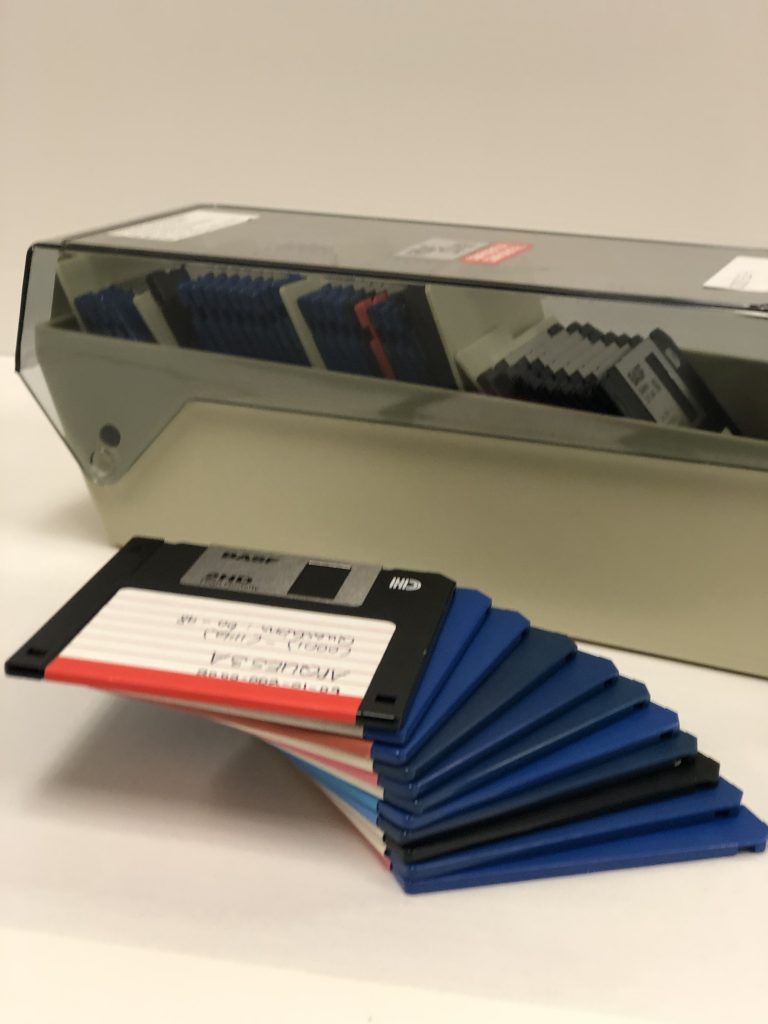
    Floppy disks / credit: Mohsen Kardar

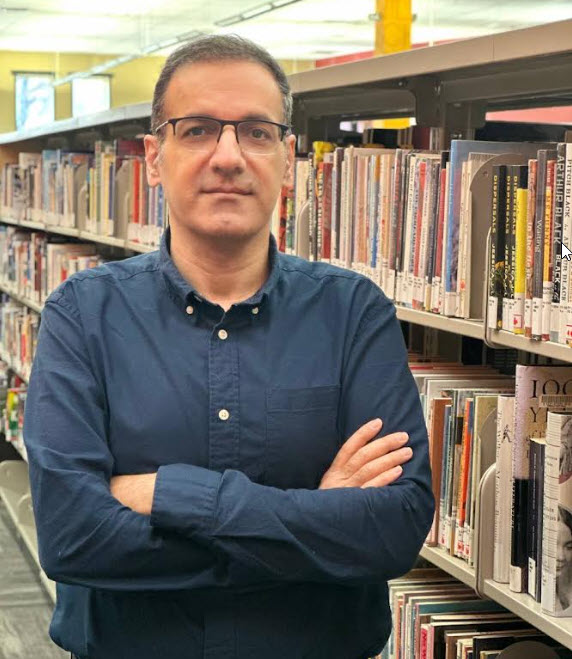
    From September 2023 to August 2024, the UAA was lucky to have Mohsen Kardar, a U of A School of Library and Information Studies alumnus, working with us as the Digital Preservation Assistant. Mohsen focused most of his time specifically on preserving archival records on floppy disks and, in addition, was involved in other digital initiatives at the Archives. As a result of the project, records from a total of 1,328 floppy disks were preserved, consisting of 788 3.5″ disks and 540 5.25″ disks. The entire process involved over 20 steps, each requiring the use of specialized software and hardware technologies to ensure successful preservation of and access to these records in the future.

    Key tools utilized:

    • KryoFlux: for creating bitstream copies of floppy disks.
    • FRED (Forensic Recovery of Evidence Device): for disk imaging and data transfers.*
    • BitCurator: for disk imaging, mounting, and scanning for personally identifiable information (PII).
    • DROID: for automated identification of file formats.
    • bulk_extractor: for scanning file systems for sensitive data.
    • BagIt and Bagger: for packaging digital objects and metadata.
    • Archivematica: for processing digital objects and metadata from ingest to access in compliance with the ISO-OAIS functional model.
    • Python scripts: for automating tasks such as virus scanning and file transfers, which significantly boosted efficiency.
    • And more!
    Mohsen Kardar

    Mohsen was instrumental in bringing this large project to fruition. Without his diligence, problem-solving skills, and focused attention, we would not have been able to complete a project of this size and complexity. Digital preservation is a collective effort and having Mohsen as part of our digital preservation community was invaluable.

    * Read more about FRED and KryoFlux in this 2023 article: Preserving Memories, One Bit at a Time:the FRED and KryoFlux Story!

    Thank you to the University of Alberta Archives team for authoring this post.

    This content is licensed under a CC BY-NC-SA 4.0 Creative Commons licence.

    0 comment
    1 FacebookLinkedinRedditWhatsappEmail
  • L’Université de l’Alberta a pour objectif d’augmenter de 50 % le nombre de publications en Libre Accès – c’est-à-dire la proportion de publications de recherche diffusées gratuitement en ligne, sans abonnement – d’ici 2028. Cette croissance est un indicateur important dans le plan de recherche et d’innovation de l’université, Forward with Purpose. Il y a toujours eu de nombreux moyens de partager les publications gratuitement. Cela inclut les options offertes par la…

  • The University of Alberta aims to grow Open Access (OA) publishing by 50% – ie. the proportion of research publications released freely online with no paywalls – by 2028. This growth is a key indicator in the University’s plan for research and innovation, Forward with Purpose.  There have always been multiple pathways to sharing publications openly. This includes options offered by the Library, such as our Publishing program (for journals and textbooks)…

  • La Semaine internationale du libre accès se déroule du 21 au 27 octobre et a pour thème cette année « La communauté plutôt que la commercialisation ». Cette semaine souligne l’importance de rendre les connaissances librement accessibles afin de servir au mieux les intérêts du public et de la communauté universitaire. Le programme de publication en libre accès de la bibliothèque de l’Université de l’Alberta est guidé par ce même sens de…

  • International Open Access Week runs from October 21 – 27; this year’s theme is focused on “Community over Commercialization.” Open Access Week celebrates the importance of making scholarship openly available to serve the best interests of the public and the academic community. The open publishing program at the University of Alberta Library has been driven by the same sense of service for many years.  Libraries around the world, including the U of…

  • To bring awareness to the Days of Action at the University of Alberta, the Library invited Heather Ritz, Community Social Worker with Wellness Supports, to share her reflections and resources to explore for World Mental Health Day – October 10.  Tending to Self Care I live in a rental house and quite miss having a garden, so this summer I got into container gardening. I had cucumbers, zucchini, tomatoes, beans, peppers, and…

  • Dans le cadre de la sensibilisation aux Days of Action at the University of Alberta, la bibliothèque a invité Heather Ritz, assistante sociale communautaire auprès de Wellness Supports à partager ses réflexions ainsi que des ressources à explorer à l’occasion de la Journée mondiale de la santé mentale, le 10 octobre. Prendre soin de soi Je vis dans une maison de location et le fait d’avoir un jardin me manque beaucoup. Cet…

  • Monday, September 30 marks National Day for Truth and Reconciliation (TRC). On that day campus services, including the Library, will close to allow students and staff to contemplate the repercussions of the Canadian residential school system. To support this reflection the Library invites students and staff to take part in the following activities.   Orange Heart Beaded Pin Activity / September 24-27 Orange shirts are symbols which mark the impacts of residential schools…

  • Stories of immigration and settlement, homesteading and going to school in the countryside, church life and traditional remedies, folk songs and recipes of old fashioned doughnuts – these are some of the topics covered in the interviews in the University of Alberta Archives’ (UAA) Héritage Franco-Albertain fonds. The fonds consists of 15.4 m of textual records as well as numerous audio recordings generated by the “Projet Héritage Franco-Albertain.” This fonds was acquired…

  • Histoires d’immigration, vie à la ferme, remèdes traditionnels, chansons folkloriques et recettes de beignets à l’ancienne, tels sont quelques-uns des sujets abordés dans les interviews des fonds Héritage Franco-Albertain des Archives de l’Université de l’Alberta (UAA). Les fonds comprennent 15,4 m de documents textuels ainsi que de nombreux enregistrements audio générés par le Projet Héritage Franco-Albertain. Les fonds ont été acquis par les Archives de l’Université de l’Alberta en 2019 auprès des…