
Search results for

"images of research"

    Please join us as we catch up with Deanna Neri, a former Images of Research semifinalist and winner of the People’s Choice Award in 2019, to talk about what she learned participating in the competition and exhibition and where she is now.

    What did you learn about yourself or your research while you created your IOR image?

    I learned that research is more than just getting data and gaining more knowledge. I realized that I can never be completely detached from my research and the people I have worked with. While I was creating my IOR entry, I felt really happy to be able to relay those important messages I have learned and the stories these people have shared with me.

    Sometimes, it can get really frustrating since it’s very hard to get tangible and measurable results from doing social research. But eventually, I realized that the value of what I’m doing can be seen through the relationships I have built with these people and the insights they have shared with me. They aren’t just sources of data, they are actual people who have significantly shaped my perspective in life. When I started seeing them as actual people and not just interviewees, I started to feel them and wanted to advocate for them. I found myself wanting to use every platform I see to share what I have learned from them. It greatly changed how I perceive and do my research. Suddenly, my work doesn’t just end with submitting my thesis anymore or even winning an award. It became a continuous journey and a significant part of me, even outside of my academic life.
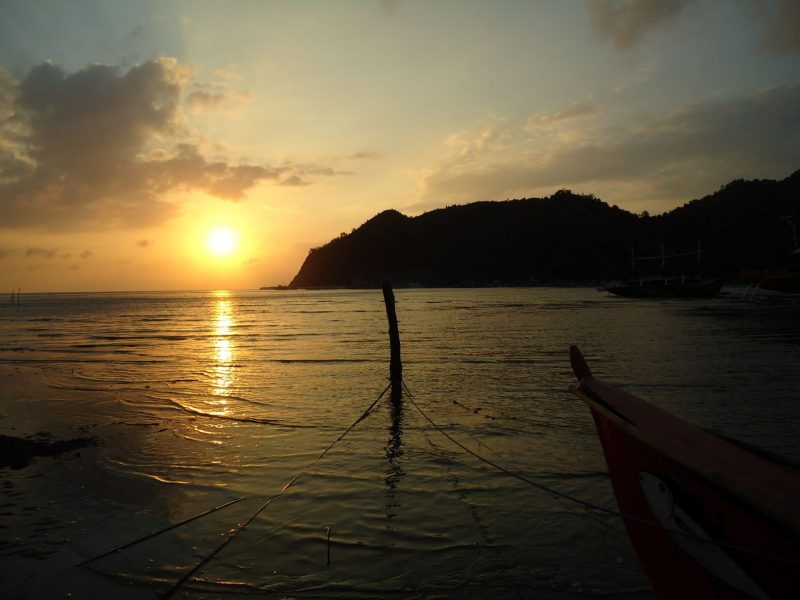
    Sunset: Uncertainties and opportunities by Deanna Joyce Neri. IOR People’s Choice Award 2019

    How did IOR boost your professional and academic skills?

    At the IOR competition, you get the chance to present your research to scholars from all disciplines and non-expert audiences. I see it as an excellent starting point to network with people from different departments. It was also a good training for me as to how can I communicate my research in a way that is relatable and relevant to a broader audience.

    This competition helped me present my work in a creative way (i.e., through a single photograph) and in the simplest manner since I had to keep in mind that I will be talking to multiple audiences and not just to people within the discipline. Research presentation is a core part of any student’s life, knowing how to communicate your research well to different people is important.

    What is your advice to researchers who are considering entering the competition in 2021?

    Joining the competition may seem daunting at first, but you just got to give it a try. What helped me a lot that time was the fact that my friends were joining too and we were so supportive of each other. Perhaps, you could also do this with your colleagues. It’s a good way to learn about each other’s work, especially when you’re coming from different disciplines. Also, it would be great if you’d set your mind on gaining that experience instead of focusing on winning. Think of it as an opportunity to enhance your presentation and networking skills.

    What’s new for you and your research?

    I have diverted from my previous research on livelihood strategies in coastal communities. Currently, I am working with migrant care workers supporting people with intellectual disabilities. While this may have been a completely different topic, I am still interested to see how these people strategize and remain resilient during times of uncertainty. Also, I am looking at how my research could help inform public policies to ensure that these “invisible” yet essential workers get decent working conditions.
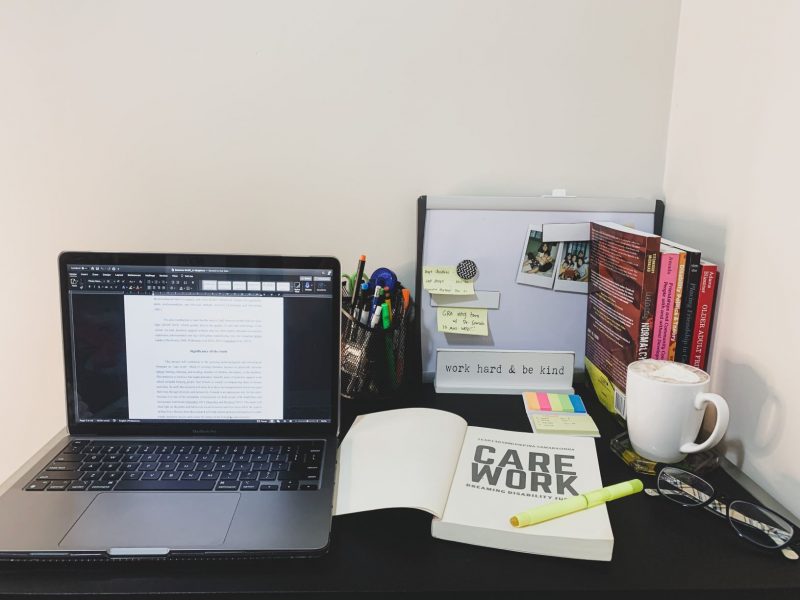
    Embracing the process. Photo by Deanna Neri

    Is there anything else you’d like to mention regarding your research/work journey since IOR?

    Nothing significant so far, I am still writing my master’s thesis. But I am glad that I joined the IOR competition. It has afforded me the opportunity to present my work to a broad audience. I was a freshman when I participated in the contest and it really helped boost my confidence to join in conferences and public presentations after that.

    We are now accepting entries for the 2021 all-digital edition of IOR. Visit the IOR website to learn more. And, there’s still time to sign up for tomorrow’s Images of Research Preparation Workshop, which runs from 2:00-4:00pm.

    0 comment
    0 FacebookLinkedinRedditWhatsappEmail
  • Please join us as we catch up with Mudasser Seraj, a former Images of Research semifinalist, on what he learned participating in the competition and exhibition and where he is now. What did you learn about yourself or your research while you created your IOR image? Visual communication is a highly effective medium to develop an interest in complex research methods among the general population. How did IOR boost your professional and…

  • Are you on the fence about entering the Images of Research Competition and Exhibition this year? We caught up with former IOR semifinalists to find out about their past experience with IOR and what happened afterwards. Please meet Jonathan Green! What did you learn about yourself or your research while you created your IOR image? Looking upon all the research I had done – the books, the journals, articles, photos, conversations –…

  • Introducing the IOR Colouring Book

    by Guest Author
    by Guest Author

    As the fall term comes to an end, and we draw closer to the end of this challenging year, everyone deserves to take a break, a breath and do something that brings us joy. For some of us that might mean an invigorating outdoor adventure, while others may prefer some cozy, quiet time with a good book, perhaps even… a colouring book. If you are amongst the artistically inclined, or long for…

  • In February 2016, a collaboration between Cameron Library and the Faculty of Science’s makerspace, The Shack, launched the University of Alberta Library’s first 3D printing service. What began with four Machina Mk2 X20 printers and training from The Shack has evolved into a sophisticated operation. Ten years later, that “low-barrier” experiment has blossomed into a campus-wide service for additive manufacturing which includes service out of Sperber Library as well as an unmediated,…

  • Mars est le Mois de la francophonie partout au Canada, et cette année, l’Alberta a officiellement déclaré 2026 « Année de la francophonie ». C’est l’occasion d’honorer et de célébrer la communauté francophone dynamique de notre province et son influence culturelle durable. Pour vous aider à vous impliquer, voici quelques événements et ressources à découvrir : Parcourir nos collections : Cette sélection de ressources explore l’histoire et la culture francophones en Alberta.…

  • In celebration of Black History Month, we invite you on a literary journey featuring a selection of books by and about Black Canadians. These are only a few of the inspiring books, music, and films about Black Canadians found in our collections. More suggestions for Black History Month: Ask us a question!  As always, if you need help with your library research… Ask us! This content is licensed under a CC BY-NC-SA 4.0 Creative…

  • September 30 is the National Day for Truth and Reconciliation. It is a day to acknowledge the painful history and ongoing impacts of the residential school system and to honour the strength and resilience of survivors and their communities. It is also a day that calls us to action and to hope. In that spirit of hope, we are proud to share this story from our Library’s Indigenous Initiatives Team, whose recent…

  • The U of A Library is proud to partner with the U of A’s Wellness Supports Team for the Days of Action. This collaboration is dedicated to fostering a supportive community by providing information and resources, encouraging open discussion, and actively working to challenge the stigma surrounding mental health at the University of Alberta. The following article is co-authored by Lucinda Johnston, Faculty Engagement Librarian and Heather Ritz, Community Social Worker. The…

  • When we think of libraries, we often see them as caretakers of knowledge which resides on pages, shelves, and in databases exclusively. However, for the members of the University of Alberta Library’s Indigenous Initiatives Team (IIT), knowledge dissemination and conservation have taken the form of a Medicine Garden located outside of Cameron Library. Emerging from ideas of community engagement, with reconciliation and Indigenization efforts at its center 1, the Medicine Garden had…