
Community

    This post was written by Debbie Feisst and Anne Carr-Wiggin, Co Leads, of University of Alberta Library’s Indigenous Initiatives Team
    As part of the University of Alberta Library’s Vision, we have committed to the priority of Decolonization and Indigenization. But what does this mean? We are working to dismantle barriers to our collections, spaces and services through collaboration and working with our community. Some other key components are considering our relationship with the land, consideration of library practices and recognition of harm. In 2020, the Library’s Indigenous Initiatives Working Group’s final report provided recommendations that spanned five themes:

    • Grow & Nurture Relationships
    • Decolonize Library Spaces
    • Enable Learning
    • Build and Digitize Collections
    • Decolonize Library Practices

    We also created a more formalized Indigenous Initiatives Team with members from a variety of Library units. In early 2021, the Team began work in a good way with Elder Francis Whiskeyjack, figuring out ways to do protocol during a pandemic over Zoom!  
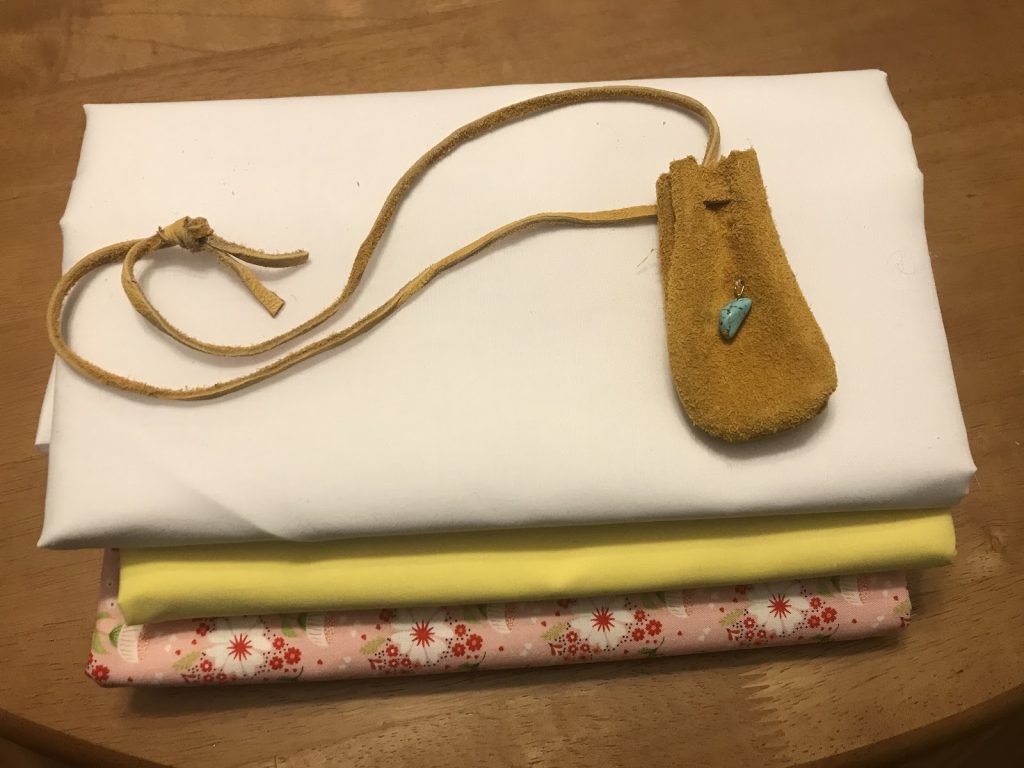
    Image: Tobacco and protocol for Elder Francis
    by Anne Carr-Wiggin

    Our initial goal was to gather our group and grow relationships amongst the Indigenous and non-Indigenous members of the Team. We spent time placing ourselves – our place on this land and the land we or our ancestors are from – and have since invited and learned from visitors and spent time developing and sharing our knowledge.

    The Current projects of the Team and the Library include:

    Engagement

    ISEG: Indigenous Student Engagement Group

    This proposed group will act as a means for First Nations, Métis and Inuit students to provide feedback and input on Library services, policies and programs. The group will identify issues, interests, opinions and suggestions. We are hopeful for a Fall 2022 start.

    We are also starting to meet with staff from other NEOS libraries who are doing work in Indigenous Initiatives. 

    Spaces


    The Library is working towards spaces that would be open for all, but available for Indigenous focused events and ceremonies, and consultations with Indigenous students began in late 2021.

    We were awarded a grant from Situated Knowledges: Indigenous Peoples and Place(SKIPP) that will allow us to enhance physical spaces and to enable programming. We want to foster an increased understanding of Indigenous perspectives and approaches to learning in support of teaching, learning and research activities at the university.

    Collections

    Decolonizing Description
    Team members are active leaders in this international movement to address and correct the problem of inappropriate and inaccurate words used to describe Indigenous peoples and topics. 

    Additionally, team members are assisting in the review of AV materials in the Circumpolar Collection selected for digitization, as well as materials to include in the Indigenous Healing Collection.

    Learning

    Recognition of the National Day for Truth and Reconciliation
    Planning is underway for programming to honour the lost children and survivors of residential schools, their families and communities.

    Working with First Peoples House and the Transition Year Program
    Team members are continuing our relationship with campus supports for Indigenous students.

    The team is eager to hear from students who would like to be part of the Indigenous student engagement group, or from anyone who has ideas or input to guide the library on the path to decolonization and appropriate Indigenization! Please get in touch with us. Email debbie.feisst@ualberta.ca or anne.carr-wiggin@ualberta.ca.

    0 comment
    0 FacebookLinkedinRedditWhatsappEmail
  • Alors que nous faisons nos adieux aux diplômés de cette année, on pourrait nous pardonner d’être un peu nostalgiques des visages et des noms des milliers d’étudiants dont les pas ont résonné dans nos couloirs au fil des décennies. Êtes-vous un ancien élève ou peut-être un membre de votre famille a-t-il étudié sur notre beau campus de Saint-Jean ? Nous avons le plaisir de vous annoncer que les annuaires historiques publiés par…

  • The Canadian Indigenous music scene is home to sounds and styles that encompass all genres. In celebration of National Indigenous History Month we are highlighting a few of the talented musicians whose work celebrates Indigenous cultures. Their music and vocals entertain but also educate and challenge us by focusing attention on crucial issues. Willie Dunn – Performing at folk festivals in the 1960s and 70s his compositions gave an eloquent voice to…

  • In 2019, the University of Alberta released their Strategic Plan for Equity, Diversity & Inclusivity. This document sets forth the institution’s strategic initiatives to, “embed EDI into the culture of the University of Alberta community, from the grassroots to the senior-most levels”. To compliment these initiatives we created a subject guide that highlights intersecting resources on Equity, Diversity & Inclusivity (EDI). Subject guides are a treasure trove of knowledge for researchers; they…

  • Au cours de la dernière décennie, le nombre d’écrivains, d’illustrateurs et d’éditeurs autochtones dans le paysage du livre pour la jeunesse a augmenté de façon notable. La bibliothèque de l’Université de l’Alberta continue d’enrichir ses collections de l’excellent travail qui se fait actuellement dans le domaine de l’édition pour enfants et jeunes adultes.  Pour célébrer le Mois de l’histoire des autochtones, nous vous présentons notre liste de lecture d’ouvrages pour la jeunesse…

  • Congratulations to you, University of Alberta graduate! You’re ready to hit up the real world with your brain full of academic wonder, but what happens when someone tries to challenge your knowledge base once you’ve left U of A’s bunny-frolicked campus grounds? Which academic resources can you use as an alumni to solidify your arguments? Fear not! Your University of Alberta Library has got your back! First, stop by the ONEcard office…

  • The Asian continent is an enormous landmass that is home to a rich array of cultural and religious traditions. As different groups migrated across it, they affected change on existing communities. Such trends can be seen throughout the history of humankind and the result has been a diffusion of ideas and traditions that take unique forms as they touch different regions. There are a number of philosophies and religions that form the…

  • Aujourd’hui, nous nous plongeons dans le bel univers de la bande dessinée et des romans graphiques.   Appelée le “9e Art”, la bande dessinée est un moyen artistique de raconter des histoires qu’il serait difficile de raconter autrement. Il s’agit d’une forme d’art unique, où l’artiste peut s’exprimer par le biais d’images et de bulles de conversation.   Les caricatures sont le précurseur des bandes dessinées, imprimées dans les journaux et les périodiques dans…

  • Introducing Aviary

    by Guest Author
    by Guest Author

    Those who make regular use of UAlberta Library’s online repository of video and audio materials might have noticed that the interface looks different. That change is Aviary, which takes the place of our former platform ERA A+V. Aside from the updated look, Aviary has several useful features like automated captioning tools, improved object discoverability, the ability to include supplemental files and more. Like ERA A+V it supports Open Access sharing of the…

  • May is Asian Heritage Month in Canada, to celebrate we are shining a spotlight on MANGA, comics or graphic novels originating from Japan. Genres of manga include, but are not limited to: shonen, seinen, shōjo, josei, fantasy and horror (Johnson-Woods, 2010). Our library has a wide range of manga available for you to discover. Here is a short list of manga recommendations (English translated) from my colleague and our library’s resident otaku,…