
Author

Guest Author

    This post was written by Lucinda Johnston, Rick Mast and Heather Ritz
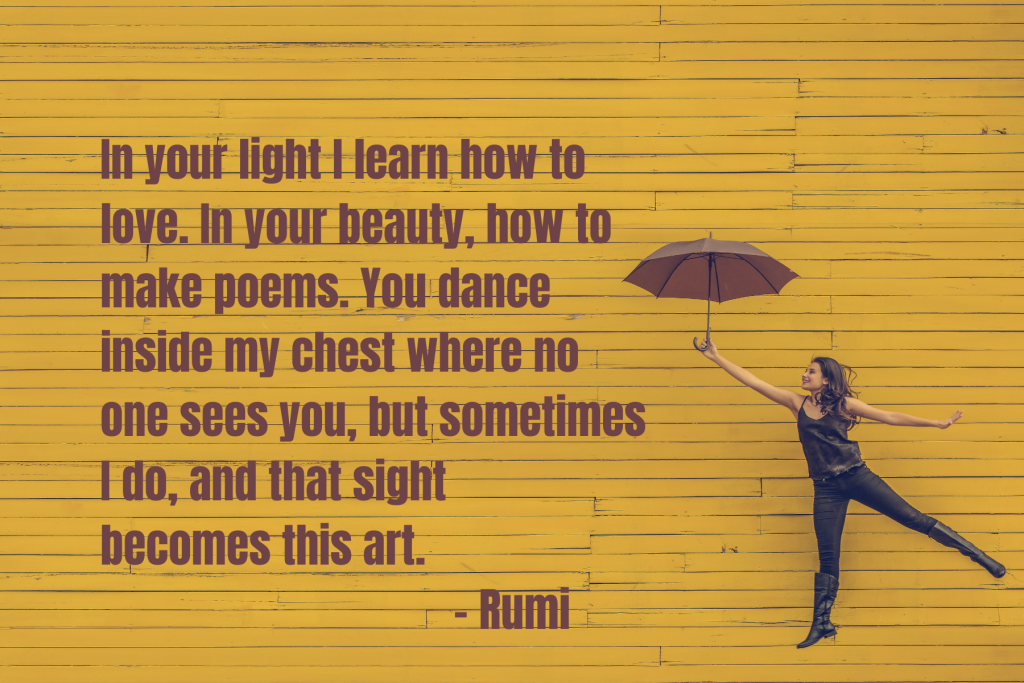
    Photo by Edu Lauton on Unsplash

    International Day of Happiness recognizes that happiness is a fundamental human goal, and reminds us that we can actively participate in our own—and others’—well being by engaging in practices that cultivate happiness. 

    Happiness Day is observed every year on March 20, a time of year when happiness can feel like a far-flung notion or can too easily be conveyed as toxic positivity. However, despite the demands, deadlines and pressure that many of us can feel at this time of year, we can foster happiness in meaningful and sustainable ways. 

    Although we know it when we feel it, happiness is challenging to define. Happiness is a positive emotional state, but each individual’s experience of that positive emotional state is subjective. When and why one experiences happiness can be the result of several factors working together, including culture, values, and personality traits.

    In psychology, there are two popular conceptions of happiness: hedonic and eudemonic. Hedonic happiness is achieved through experiences of pleasure and enjoyment, while eudemonic happiness is achieved through experiences of meaning and purpose. Both kinds of happiness are achieved, and contribute to overall well-being, in different ways.

    Poetry in all its forms—chants, ballads, odes, couplets, quatrains, Haiku, prayer…written down, spoken aloud, set to music—has long been among the ultimate modes of expression to convey the individual and collective experience. The Days of Action committee for International Day of Happiness, in partnership with the U of A  Library, invites YOU to contribute a poem that explores your experience of happiness and what it means to you.

    The collection of poetry related to the experience of happiness will include up to 20 original works by University of Alberta community members and will be shared through various publication formats:

    • Recorded recitations, 
    • Printed as a chap book for general distribution,
    • Printed and displayed as individual poems across all campuses.

    We intend for the collection of poems to reflect diversity of thought, voice, and experience. As such, individual selection of poems will consider the project as a whole. University of Alberta students, faculty, staff and alumni are all invited to submit poems in any language; you do not need to be an established or published poet.

    Your contribution doesn’t need to be new or current work. However, if you choose to write something for this project, here are some prompts to get you going:

    • Explore the difference between hedonic and eudemonic happiness, how have you experienced one or both of these?
    • Practice a loving kindness meditation, like this one, and write in response to your experience.
    • Do an activity that you enjoy and pay attention to how enjoyment shows up in your thoughts, body, self-talk or relationships.
    • Express gratitude to someone in your life who does something that usually goes unnoticed.
    • Read one of these poems for inspiration.

    An example of an expression of happiness that we would love to receive from you, courtesy of Tom Waits and his Closing Time album (1973) on Asylum Records:

    Midnight Lullaby

    Sing a song of sixpence, pocket full of rye

    Hush-a-bye my baby, no need to be crying

    You can burn the midnight oil with me as long as you will

    Stare out at the moon upon the windowsill

    And dream

    Sing a song of sixpence, a pocket full of rye

    Hush-a-bye my baby, no need to be crying

    There’s dew drops on the windowsill, and gumdrops in your head

    You’re slipping into dreamland, you’re nodding your head

    So dream

    Dream of West Virginia, or of the British Isles

    ‘Cause when you are dreaming, you see for miles and miles

    When you are much older, remember when we sat

    At midnight on the windowsill, and had this little chat

    And dream

    See our International Day of Happiness webpage for more information about the 2023 Happiness Poetry Project, and for the selection criteria. Click here to submit a poem. Deadline for submission is 12:00 noon, January 20, 2023.

    2 comments
    2 FacebookLinkedinRedditWhatsappEmail
  • This post is written by Map Collection Staff, Larry Laliberte & Bonnie Gallinger. The Indigenous Peoples and Canada’s National Parks guide is a multidisciplinary literature review that introduces the historical and current relationship of Indigenous people and Canada’s National Parks. The creation of this guide is part of ongoing work to re-positioning the William C. Wonders (WCW) map collection.  This guide is an example of the growing awareness that Indigenous peoples’ experience in the…

  • It’s crunch time! Projects are almost due, final exams are on the horizon and there just doesn’t seem to be enough time to get everything done. In times like this, it’s easy to get overwhelmed and forget to take care of ourselves. Here at the library we feel for you. A few of our student employees were willing to share little bits of wisdom on how they make the most of their…

  • This post is written by Map Collection Staff, Larry Laliberte & Bonnie Gallinger. The William C. Wonders (WCW) map collection is actively consulted throughout the year and includes a wide range of reference questions drawing upon various thematic sections of the collection. Reference questions are the primary drivers in the accumulation of tacit staff knowledge of numerous research areas thus deepening the reference experience for our researchers. The identification of relevant map…

  • This post was written by MACT student Joana Mazumder The Gourmand Awards, often compared to the ‘Oscars’ for the culinary industry, honours the world’s best food and wine books, print and digital, and food television. This year, a Canadian book titled, The High Protein Cookbook for Muscle Health During Cancer Treatment by Hillary Wilson, Anissa Armet, and Professor Carla Prado has won the Gourmand World Cookbook Awards 2022 for the University Press…

  • Écrit par CJ de Jong, coordinateur des services d’accès, bibliothécaire et Lucinda Johnston, bibliothécaire. Ces deux dernières années, les enseignants ont utilisé Talis Aspire pour créer des listes de lecture et réserver du matériel de cours à la bibliothèque. Cette plateforme nous permet de savoir quels matériels sont utilisés dans un cours et nous nous assurons que, dans la mesure du possible, il y a un accès électronique et que le matériel…

  • This post was written by CJ de Jong, Access Services Coordinator, Librarian and Librarian Lucinda Johnston The last couple of years we have been using Talis Aspire for instructors to create reading lists and reserve course materials in the Library. Instructors use this platform to let us know which materials are being used in a course and we will make sure that, where possible, there is electronic access, and print material is…

  • La bibliothèque de l’Université de l’Alberta possède une collection assez vaste. Qu’il s’agisse de livres et de périodiques, d’articles de journaux, de vidéos et d’audio en continu, de kits divers, de jeux ou autres, les ressources à explorer ne manquent pas.  Néanmoins, nous devons parfois chercher plus loin et emprunter des documents à des bibliothèques extérieures au consortium NEOS. Nous appelons cela des prêts entre bibliothèques (PEB). Un PEB est la meilleure…

  • Hidden Gems: The New Yorker

    by Guest Author
    by Guest Author

    The University of Alberta Library subscribes to numerous resources that are core for certain disciplines, but also really deserving of wider attention. Here is one of those gems… For almost a century, The New Yorker has been a landmark source of modern literature. Short stories by noteworthy authors like Shirley Jackson, Philip Roth, Stephen King and Haruki Murakami, to name a few, have been featured in its pages. Writers working for the…

  • DROIT D’AUTEUR 101 : Concepts de base

    by Guest Author
    by Guest Author

    Cet article a été rédigé par Adrian Sheppard, directeur du Bureau du droit d’auteur, et Amanda Wakaruk, bibliothécaire spécialiste du droit d’auteur et des communications savantes. La traduction française a été réalisée par Linda Gisenya. Qu’est-ce que le droit d’auteur ? Le droit d’auteur est un ensemble de droits juridiques établis par le gouvernement fédéral et les tribunaux, par le biais de la législation et de la jurisprudence. Les sanctions en cas…