
By Abbie Schenk
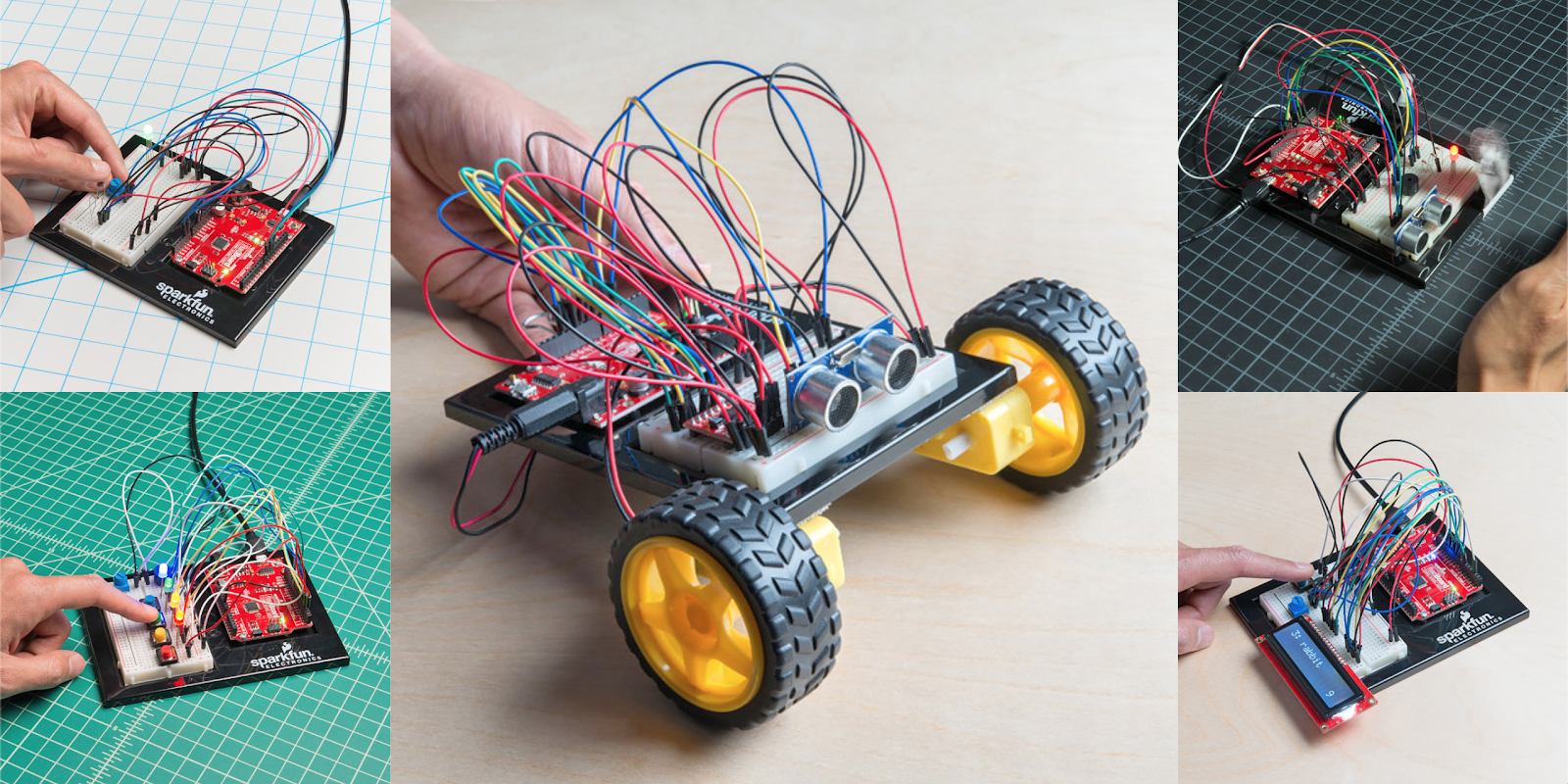
Imagine a programming workshop: students sitting behind monitors and laptops, quietly typing line after line of code to make their computers spit out words, solve math problems, and manipulate pixels on those same screens. Their education is almost entirely contained to the virtual realm.
But a different form of computer science education has emerged in the last few years: physical computing.
“A recent growth area in computer science education is physical computing, which involves combining software and hardware to build interactive physical systems that sense and respond to the real world” (Hodges et al., 2020, p. 20).
One of the most common forms of physical computing is the Arduino system, which uses a simplified programming language to manipulate various sensors, moveable parts, and more. The Arduino project can be used to create robots, games, alarms, and other projects.
Physical computing aligns with a constructionist pedagogical approach, where knowledge is reconstructed through the manipulation of materials rather than just being transmitted— and most effectively so when a meaningful product is constructed in the process (Papert as cited in Dagienė & Futschek, 2019). Some benefits of a constructionist, physical computing approach to learning include:
- Motivation: The experience and outcomes are visible, not just virtual, which makes it easier for students to understand what’s working (and what isn’t).
- Tangibility and interactivity: Students more easily connect with what they’re trying to accomplish and learn concepts such as iterative design.
- Learning by doing: Physical computing is trial-and-error-based, with no one right solution. This makes it easier for students to be creative.
- Collaboration and inclusion: It’s easier to have students collaborate on physical projects than all trying to share a screen.
(Hodges et al., 2019, p. 24–25).
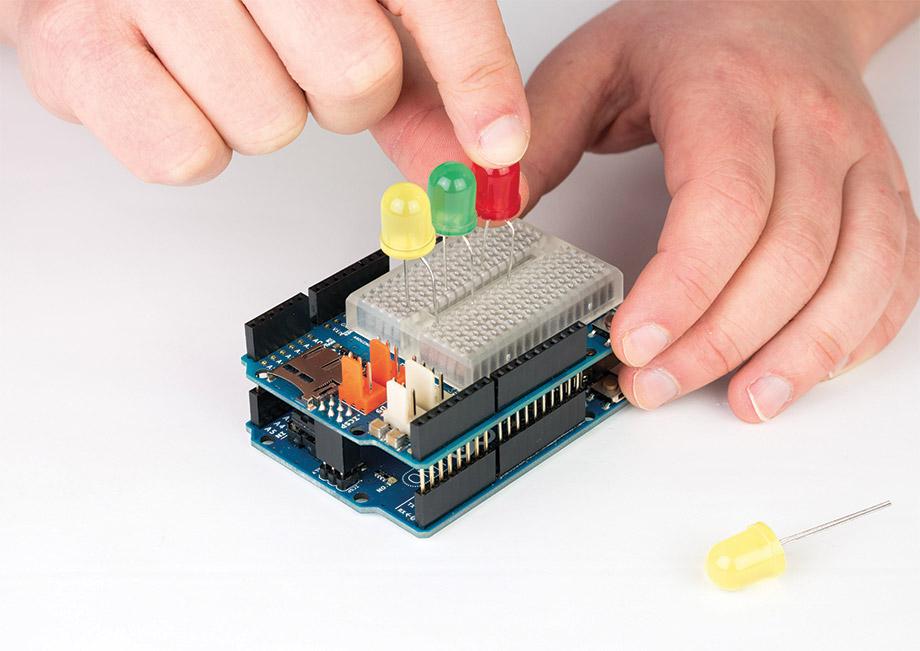
As the Digital Scholarship Centre (DSC) aims for a constructionist approach to our workshops, we consider physical computing a key area of interest. We currently have the following physical computing devices:
- SparkFun Spectacle: A simple platform that allows making with no prior programming knowledge. We have a Motion Kit and a Sound Kit that can be used by themselves or in combination to create projects like a Super Mario diorama.
- Arduino CTC 101 Kit: A starter kit for Arduino in classroom settings that includes components used to create robots, interact with sensors, communicate over Bluetooth, and much more.
- SparkFun Inventor’s Kit: An Arduino-based starter kit that can be used to create games, robots, alarms, sensors, and more.
- SparkFun Lilypad ProtoSnap Plus: A sewable computing kit used for creating e-textiles, such as a Star Wars Christmas sweater with flashing lights.
- Digilent Analog Discovery 2: A device that allows users to create, record, and control signal circuits.
The DSC is currently researching how to use physical computing to facilitate learning. When we return, we will work with other learners in workshops to discover together how physical computing can be used to learn more about our world. If you have ideas, we are always interested in hearing from you at dsc.library@ualberta.ca!
References
Dagienė, V., & Futschek, G. (2019). On the Way to Constructionist Learning of Computational Thinking in Regular School Settings. Constructivist Foundations, 14(3), 231–233.
Hodges, S., Sentance, S., Finney, J., & Ball, T. (2020). Physical computing: A key element of modern computer science education. Computer, 53(4), 20-30. Chicago